Quick Info
In der jüngsten Zeit tauchen immer öfter Berichte auf, dass junge Leute sich von den Medien zu einem „transgender Hype“ verführen lassen. Solche Thesen werden überwiegend von rechten und evangelikalen radikalen Gruppen geäußert, die gegen eine vermeintliche „Genderideologie“ ankämpfen wollen.
Tatsächlich ist es so, dass jüngere Generationen viel offener und selbstbewusster mit ihrer Geschlechtsidentität umgehen als dies bspw. noch vor 40 Jahren der Fall war. Bei den früheren Generationen waren die Zahlen noch deutlich geringer. In den Medien wird das häufig als „transgender Trend“ oder „Modeerscheinung“ o.ä. gewertet. An der Stelle gebe ich immer zu bedenken, dass junge Leute von damals nicht den selben Zugang zu Informationsquellen hatten wie heute. In Lexika existierten Begriffe wie trans* noch nicht. Berichte dazu waren höchstens in Fachliteratur zu finden. Heute gelangt man durch die sozialen Medien viel eher an Informationen, die für eine Person selbst relevant sein könnten, so dass ein AHA-Effekt viel früher entsteht. Auch die Gesetzeslage hat sich insgesamt für LSBTI-Personen verändert. Als Beispiel kann u.a. die „Ehe für Alle“ genannt werden, wodurch in der Gesellschaft die Sichtbarkeit und die Akzeptanz von LSBTI-Personen insgesamt zugenommen hat. Gallup schreibt dazu:
One of the biggest recent advances in LGBT rights was the legalization of same-sex marriage nationwide. Gallup’s new estimates on same-sex marriages and domestic partnerships in the U.S. can be found here.
Es handelt sich also nicht um einen Trend, sondern wir erleben einen demografischen Wandel innerhalb der Gesellschaft, der dazu beiträgt, dass junge Menschen (viel früher als noch vor 40 Jahren!) den Mut finden zu sich zu stehen und ein klares Bekenntnis äußern wer sie sind.
Nachfolgend werden nun einige verlässliche Studien vorgestellt, welche darum bemüht sind diese doch sehr kleine Personengruppen zu erfassen.
Filmdatenbank IMDB
-
- Let me die a woman (1977)Let Me Die a Woman Documentary | 1977 (United States)
 5.3
5.3

 Director: Doris WishmanWriter: Doris WishmanStars: Leslie, Deborah Harten, Lisa CarmelleSummary: A documentary on the work of sex-change specialist Dr. Leo Wollman, including interviews with Dr. Wollman and a few of his patients, with an illustrated lecture on the various aspects of trans-identity plus actual footage of a gender reassignment operation, which is what gives the film its notoriety. —Michael Brooke <michael@everyman.demon.co.uk>
Photos


See all photos >> -
Pfahl in meinem Fleisch (1969)
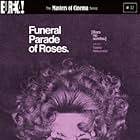
Funeral Parade of Roses Drama | September 13, 1969 (Japan) 7.9
 Director: Toshio MatsumotoWriter: Toshio MatsumotoStars: Pîtâ, Osamu Ogasawara, Yoshimi JôSummary: While dealing drugs on the side, Gonda operates the Genet, a gay bar in Tokyo where he has hired a stable of transvestites to service the customers. The madame or lead "girl" of the bar is Leda, an older, old fashioned geisha-styled transvestite with who Gonda lives and is in a relationship. Arguably, the most popular of the girls working at the bar now is Eddie, a younger, modern transvestite. Like Leda, Eddie lives openly as a woman. Eddie's troubled life includes her father having deserted the family when she was a child, and having had a difficult relationship with her mother following, she who mocked Eddie's ability to be the man the of the family. Gonda enters into a sexual relationship with Eddie, who he promises to make madame of the bar, replacing Leda in both facets of his life, with Eddie having threatened to quit otherwise. While Leda suspects what Gonda and Eddie are up to, Gonda tells Leda what she wants to hear, much as he tells Eddie what she wants to hear. As this triangle plays itself out, what actually happens is affected by a joint history between Gonda and Eddie of which they are unaware. This film teeters between fiction and non-fiction as a secondary story is Eddie's friendship with a group of counter-culturalists, including filmmaker Guevara, whose making of a movie mirrors the making of this film. That balance tips into non-fiction as the actual actors in this and Guevara's movie talk about issues covered in this film, such as drug use, and sexuality, especially transvestism as the transvestite characters are played by real life transvestites. —Huggo
Photos


See all photos >> - Myra Breckinridge – Mann oder Frau? (1970)Myra Breckinridge - Mann oder Frau? Comedy | October 2, 1970 (West Germany) 4.5
 Director: Michael SarneWriter: Gore Vidal, Michael Sarne, David GilerStars: Mae West, John Huston, Raquel WelchSummary: Myron Breckinridge (Rex Reed) is waiting for her sex-change operation while a stoned surgeon stumbles into the operating room. Before the drugged doctor begins Myron's operation, he counsels her. Myron persists and the doctor goes through with it. An enthusiastic audience observing the operation applauds the medical achievement and rises in a standing ovation. After the operation, Myron arrives in Hollywood as Myra Breckinridge (Raquel Welch) while in the rest of this movie, Myron pops up from time to time as Myra's alter ego. Myra goes to an acting academy owned by her uncle, Buck Loner (John Huston), a former cowboy star. The real reason for Myra's arrival is to claim her half of Uncle Buck's estate, to which she says she's entitled. Buck Loner stalls by giving her a job teaching the history of motion pictures. Buck Loner has several friends. One of them is Leticia Van Allen (Mae West), an ancient Hollywood talent scout. The sex-starved septuagenarian runs an acting agency "for leading men only". —alfiehitchie, RavenGlamDVDCollector ElectricLadyLand
Photos



See all photos >>
- Let me die a woman (1977)